
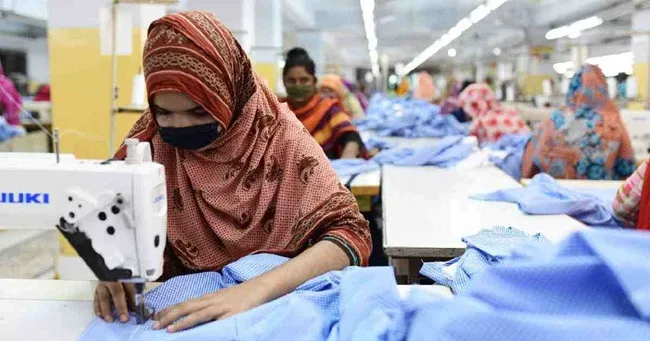
Dhaka: More than 400 ready-made garment (RMG) factories in Bangladesh have shut down over the past three years amid a combination of global economic pressures and domestic challenges, Commerce Minister Khandakar Abdul Muktadir told Parliament.
According to the minister, a total of 405 factories affiliated with the country's two major apparel trade bodies closed between July 2023 and June 2026. Of these, 282 were members of the Bangladesh Garment Manufacturers and Exporters Association (BGMEA), while 123 were members of the Bangladesh Knitwear Manufacturers and Exporters Association (BKMEA).
The minister disclosed the figures on Thursday while responding to a question from MP Md Ruhul Amin during a question-and-answer session of the Jatiya Sangsad. Speaker Hafiz Uddin Ahmed presided over the session.
Muktadir said the government is still compiling a complete list of the factories that have closed, indicating that the number could change as further information is collected.
Multiple pressures behind factory closures
The commerce minister attributed the closures to a combination of international and domestic factors.
Among the major challenges he identified were the lingering effects of the COVID-19 pandemic, the Russia-Ukraine war, conflicts in the Middle East, the global economic slowdown and political instability in Bangladesh.
The sector has also been affected by liquidity problems in the banking system, which the minister linked partly to money laundering. Growing competition from countries such as India and Vietnam, supported by free-trade arrangements with European markets, has added further pressure on Bangladeshi apparel manufacturers.
Small and medium-sized garment factories have faced particularly difficult conditions. According to the minister, international buyers are increasingly reluctant to place orders with smaller factories because they prefer suppliers that are easier to monitor directly.
At the same time, rising energy costs, higher lending rates, increased wages and shortages of gas have pushed up production expenses and made it difficult for many factories to operate at full capacity.
Government offers incentives to support RMG sector
The government has introduced several financial measures aimed at helping the textile and garment industries remain competitive in international markets.
Muktadir said export-oriented domestic textile manufacturers are receiving a 1.50% alternative cash incentive in place of bonded warehouse and duty-drawback facilities. Textile exporters shipping to the Eurozone are receiving an additional 0.50% incentive.
Small and medium-sized enterprises operating in the export-oriented knitwear, woven and sweater segments are also receiving an additional 3% incentive, while a special 0.30% cash incentive is available for the garment sector.
Bangladesh seeks new export markets
The government is also seeking to diversify Bangladesh's apparel export destinations as competition in traditional markets intensifies.
According to the minister, Bangladesh plans to participate in international trade fairs across regions including the Middle East, Japan, Canada, Australia, Africa, Central Asia and Latin America during the 2026-27 fiscal year.
The government is also pursuing trade agreements with potential markets to strengthen market access. Bangladesh has concluded an Economic Partnership Agreement with Japan and is advancing negotiations with South Korea, while discussions are also being pursued with other potential trading partners.
The situation is particularly significant as Bangladesh prepares for graduation from the Least Developed Country (LDC) category. The minister has warned that the loss of preferential market access could put around $17.5 billion in annual exports at risk, increasing the need for greater competitiveness and market diversification.
With more than 400 factories closing in three years, the latest figures highlight the mounting pressure on Bangladesh's garment industry and the need for measures to improve financing, energy security, production efficiency and access to international buyers.